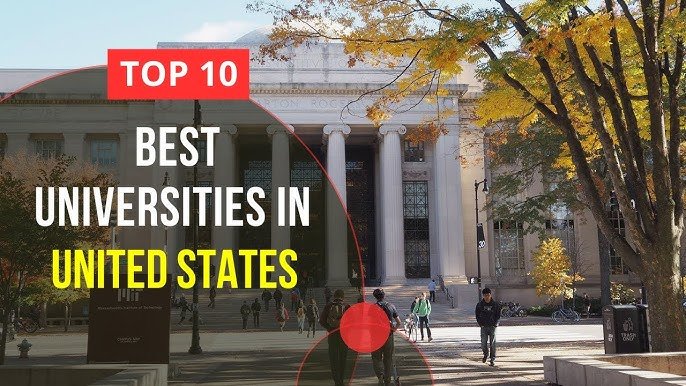
The United States is home to some of the world’s most prestigious colleges and universities, offering exceptional academic programs, cutting-edge research opportunities, and vibrant campus communities. Choosing the right college can be a transformative decision, shaping a student’s academic and professional future. Based on recent rankings from reputable sources like U.S. News & World Report, Forbes, and Times Higher Education, this article highlights the top 5 colleges in the USA for 2025, exploring their unique strengths, academic excellence, and contributions to higher education.
1. Princeton University
Location: Princeton, New Jersey
Type: Private
Key Strengths: Undergraduate focus, research excellence, generous financial aid
Princeton University consistently tops national rankings, securing the #1 spot in both U.S. News & World Report and Forbes’ 2025 lists. Known for its strong emphasis on undergraduate education, Princeton offers a low student-to-faculty ratio of 5:1, fostering close interactions between students and world-class faculty. Its picturesque campus and liberal arts curriculum provide a well-rounded education, with notable programs in the humanities, social sciences, and natural sciences. Princeton’s financial aid program is among the most generous, with an average grant aid of $59,792, ensuring accessibility for students from diverse economic backgrounds. The university boasts a 97% six-year graduation rate for low-income students, reflecting its commitment to student success. Additionally, Princeton’s research facilities and vibrant alumni network contribute to its reputation as a global leader in higher education.
2. Massachusetts Institute of Technology (MIT)
Location: Cambridge, Massachusetts
Type: Private
Key Strengths: Innovation, STEM programs, hands-on learning
MIT ranks #1 in the Times Higher Education World University Rankings and #7 in CollegeSimply’s 2025 rankings, renowned for its unparalleled focus on science, technology, engineering, and mathematics (STEM). With a student-to-faculty ratio of 3:1, MIT provides personalized attention and opportunities for hands-on research. Its graduates earn an average early-career salary of $143,372, reflecting the institution’s strong industry connections and career outcomes. MIT’s innovative culture, exemplified by its proximity to tech hubs and partnerships with industry leaders, makes it a powerhouse for aspiring engineers, scientists, and entrepreneurs. The university’s rigorous academic programs and collaborative environment encourage students to tackle global challenges through cutting-edge research.
3. Harvard University
Location: Cambridge, Massachusetts
Type: Private
Key Strengths: Global reputation, diverse programs, extensive resources
Harvard University, ranked #2 by Times Higher Education and #4 by CollegeSimply, is synonymous with academic prestige. Offering a wide range of programs across law, business, medicine, and the arts, Harvard attracts students globally with its illustrious faculty and state-of-the-art facilities. The university’s 98% freshman retention rate and 86% four-year graduation rate underscore its commitment to student satisfaction and success. Harvard graduates earn an average early-career salary of $101,817, supported by a robust alumni network and career services. Its endowment, one of the largest in the world, funds extensive research opportunities and generous financial aid, with an average grant of $61,801. Harvard’s vibrant campus life and global influence make it a top choice for ambitious students.
4. Stanford University
Location: Stanford, California
Type: Private
Key Strengths: Entrepreneurial spirit, interdisciplinary studies, Silicon Valley proximity
Located in the heart of Silicon Valley, Stanford University ranks #2 in Forbes’ 2025 list and #3 in QS World University Rankings. Known for its innovation and entrepreneurial culture, Stanford fosters interdisciplinary collaboration, particularly in engineering, computer science, and business. Its graduates have low average student debt ($12,999) and high median 10-year salaries ($177,500), reflecting strong return on investment. Stanford’s proximity to tech giants like Google and Apple provides unique internship and career opportunities. With a 98% freshman retention rate and a diverse range of academic programs, Stanford continues to shape leaders in technology and beyond.
5. Yale University
Location: New Haven, Connecticut
Type: Private
Key Strengths: Liberal arts education, global outlook, strong alumni network
Yale University rounds out the top five, ranking #4 in Forbes’ 2025 list and #7 in Times Higher Education’s rankings. Known for its liberal arts focus and global perspective, Yale offers a broad curriculum spanning humanities, social sciences, and sciences. Its 95% four-year graduation rate and $168,300 median 10-year salary highlight its academic rigor and career outcomes. Yale’s financial aid program, with an average grant of $63,523, ensures accessibility, while its vibrant campus community fosters intellectual and personal growth. The university’s commitment to diversity and inclusion, combined with its historic legacy, makes it a standout choice for students seeking a transformative education.
Why These Colleges Stand Out
These top five colleges—Princeton, MIT, Harvard, Stanford, and Yale—consistently rank among the best due to their academic excellence, innovative research, and strong career outcomes. Each institution offers unique strengths, from Princeton’s undergraduate focus to MIT’s STEM leadership and Stanford’s entrepreneurial ecosystem. Their low student-to-faculty ratios, generous financial aid, and high graduation rates ensure students receive personalized attention and support. Moreover, their global reputation and extensive alumni networks open doors to competitive careers worldwide.
Emerging Trends in Higher Education
Beyond their academic offerings, these colleges are at the forefront of trends shaping higher education in 2025:
- Online Learning: Institutions like Harvard and Stanford offer online courses, increasing accessibility for non-traditional students.
- Experiential Learning: Hands-on opportunities, such as MIT’s research projects and Stanford’s industry partnerships, prepare students for real-world challenges.
- Diversity and Inclusion: Yale and Princeton prioritize inclusive environments, fostering diverse student bodies and curricula.
- Sustainability: These colleges implement green initiatives, with Stanford leading in sustainable campus practices.
- Globalization: International programs at Yale and Harvard expose students to global perspectives, enhancing cross-cultural understanding.
Conclusion
The top 5 colleges in the USA for 2025—Princeton, MIT, Harvard, Stanford, and Yale—offer unparalleled academic experiences, preparing students for success in a rapidly changing world. Their commitment to innovation, inclusivity, and excellence ensures they remain leaders in higher education. For students seeking world-class education and transformative opportunities, these institutions are exceptional choices.